
Losing My Religions
A postcard from discovery, with moss, Medawar, and music

Last year I sold my last car. The shame of it clung to me like wet wool.
My climate-conscious colleagues nodded. It made sense. They hadn’t seen the moss creeping across the window, the thrice-flattened battery beyond resuscitation, the ‘but-what-ifs’ I sold myself. Again. And again.
I would tell you my sole interest in cars is getting from A to B, but my vehicular relationships tell another story. I shimmied through Oxfordshire country roads in my first car, a nimble Vauxhall Nova Gem, mis-singing Tracy Chapman: “I got a fast car, I got a ticket to anywhere”. Then there was the slinky midnight blue 2-door Peugeot 205 GTi, with no room for a child seat; and the Subaru Imprezza that purred on rare roadtrips but was sluggish-heavy on the daily commute.
I got that Subaru in the divorce and traded it for a Tornado Red Volkswagen Golf to future fit the reliable-with-a-hint-of-danger new me. Cars, it would seem, have been symbols of selves I wanted to choose.
Didion1 was more sensible, preferring notebooks over cars to keep tabs on herself. But her counsel to “keep on nodding terms with the people we used to be” sits uneasily with me. Too genteel. As if we can hand in our prior versions to be valet parked. But are they so decorous, so discrete? Are we in the driving seat? Our religions are determined by our parents, our patriotism by our birth place, our politics by our peers, our fealties by our families.
Our identities are sticky and devious, seeping into every crevice, like oil slicks. We cannot easily escape the people we used to be. You can’t nod in a headlock.
I am a scientist. It is one of my most durable selves, core not costume. I can frolic in the fields of discovery as long as postcards home adhere to the strict publication codes of club science: avoid narrative (it sounds like persuasion), avoid politics (it sounds like bias), keep your voice neutral, your values hidden. Science is no one’s handmaiden. Speak outside the club if you must, but know that it’s risky: a little too visible, a little too look-at-me, a little too human.
Was it always like this?
Long before having arrived at this part of my work, a crowd of difficulties will have occurred to the reader. Some of them are so grave that to this day I can never reflect on them without being staggered; but, to the best of my judgment, the greater number are only apparent, and those that are real are not, I think, fatal to my theory. — Charles Darwin, On the Origin of Species
Science used to be personal, because personality mattered. Credibility traveled through character; to trust the science you had to trust the man (sadly, inevitably, it was always a man). But as science outgrew its gentleman club origins, trust transferred from person to process, and scientists moved behind the camera, to be seen only in the credits.
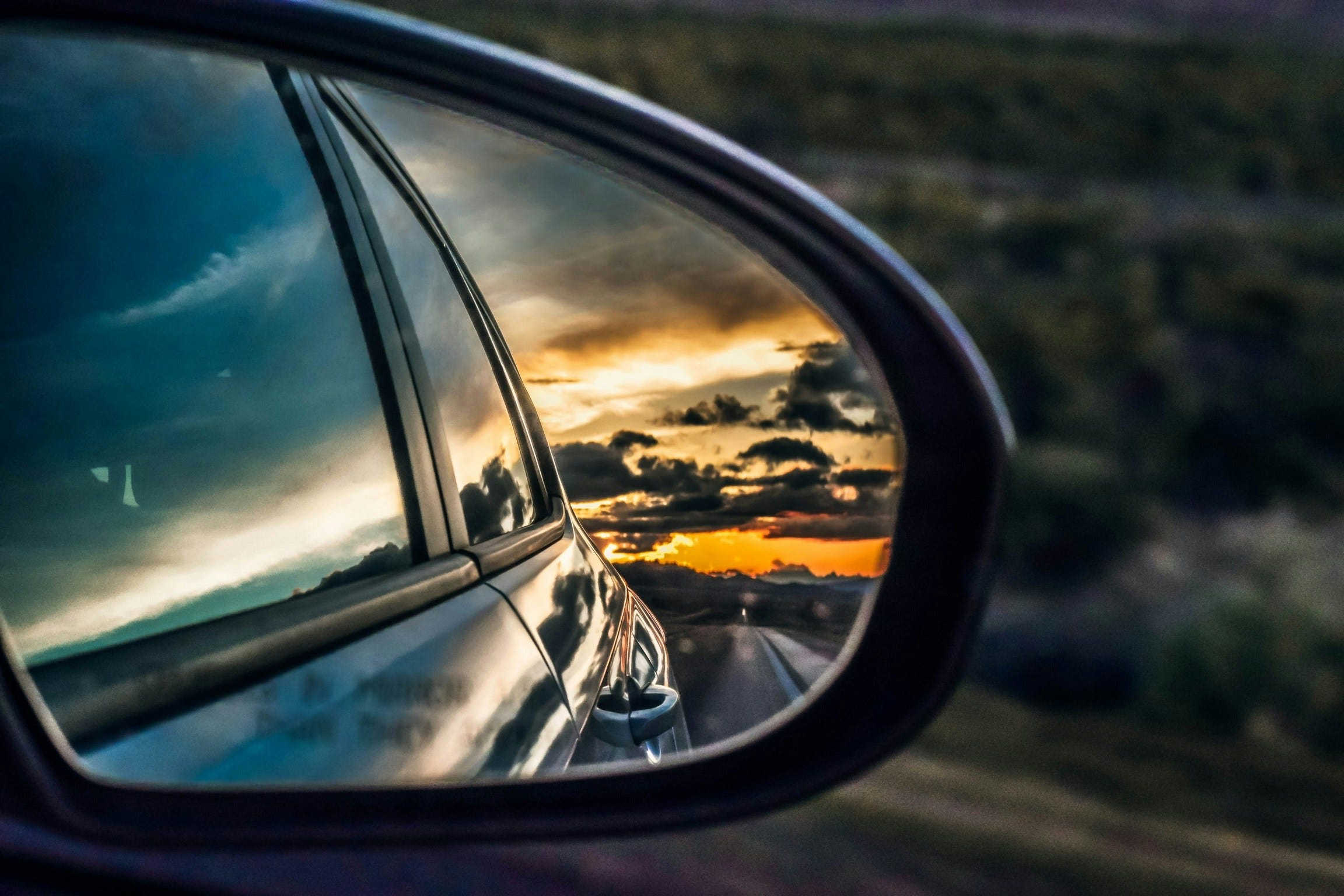
I am a singer-songwriter. It is one of my most skittish selves, secretive but sincere. Songs are my Pullman daemon—comforting, challenging, contorting. As I write this, REM is looping through my brain:
That’s me in the corner
That’s me in the spotlight
Losing my religion.
Norms have authored me, and I have barely noticed, mistaking occasional gutsy rebellions for autonomy. But we are all living in our own Truman Show. Once you see it, you start probing the invisible walls like a mime artist. Feeling for the edge.
That’s me in a corner
That’s me in a spot
Light, choosing my religions.
In my wilderness years of uncomfortable car ownership I tossed the keys to avoidance, and unfurled on the back seat, waiting for some external event to prove I didn’t need it, the moss mocking me. I half-knew, the way hands know the curves of a dark lane before headlights, that it was really about freedom. The just-in-case freedom that feels like the deep breath you take after being underwater a fraction too long.
I thought an electric car might ease my breathing, another deal with myself. The sleek interior smelt of good choices: high ambitions, low emissions, bravura, beauty. But beauty always has its beast. The Muskmobile had to go. Unavoidable.
And who is the non-car-owning new me? She walks more, she plans more, she asks for favours more. Grudgingly. But mostly, reprieved from the wearing recalibrations of negotiating London traffic, she thinks more.
The kernel of this essay emerged during a long, unexplained wait at a back-of-beyond train station. I was irritated, brimful with car-seller-regret. I didn’t see that I had been gifted time. Time to think, that most precious of freedoms. I am car-free, and still free.
The shame, then, isn’t that I made the wrong call about the car, it’s that I didn’t have a practice to make an active decision about it. Didion understood. Her notebooks were not an accurate record, as she admits: “I tell what some would call lies”. They caught the fleeting detail, the emotional temperature, the hidden meanings that helped her keep who she wanted to be. Not evidence. Not confession. An act of self-maintenance, inked and forever re-interpretable.
We impose maintenance systems everywhere: servicing, renewals, audits, check-ins, MOTs. But for ourselves we default to romance (this is just who I am) or performance (look what I did). Who we are is in the choices between these. It is in the choosing where integrity lies, where identity hides.
When I opened the proofs for my first scientific paper a bone-deep tiredness supplanted my elation. “Minor edits have been made to the text for clarity”, the cover letter informed me, as if it was a loose strand of hair that needed smoothing. I knew it was not. This was the ninth month of often confusing edits: change the voice, reorder the results, add more discussion, reduce the word count, add more references, don’t have more than 30 references. I had complied, with bitten nails and bleary eyes.
There were some minor, though not necessarily better, new edits (goodbye oxford comma). I preened briefly at reversions to my original wording, but they were hollow triumphs, too many injuries sustained to be victories. And then I saw it, the sentence that now stated the opposite of what we had found.
I hurled into my supervisor’s office, incandescent. I told him. We were going to pull the paper, I was going to die on my sword. He gently explained that I had no sword, and no one would come to my funeral anyway, cos I didn’t exist. Yes, it was unacceptable that the science was now inaccurate. They would change it back. The rest didn’t matter. Let it go, move on. This is how science works.
I slunk back to my desk feeling childish, girlish, stupidish, churlish and above all, disillusioned. I moved on.
Until, many years and many papers later, I came across Peter Medawar’s 1964 lecture Is the scientific paper a fraud? in which he says: “The scientific paper in its orthodox form does embody a totally mistaken conception, even a travesty, of the nature of scientific thought”.
You can still punch the air in a headlock.
Club science hasn’t paid any mind to Medawar, it still believes “the reader usually does not need or want to know about false starts, failed experiments, and changes of direction”. Maybe. But omitting them teaches that failures, unexpected results, changing one’s mind, are mistakes rather than lessons.
Science is not a factory for certainty. Facts are context-dependent and transitional. Cars are safer than motorbikes, less safe than trains; high-emission next to a bicycle, low-emission next to a plane.
Scientists are not about being right; we are about becoming less wrong. The answer is not the achievement; it is the discipline: the sustained, unglamorous vigilance against the human foibles that distract and derail us. This is what can be trusted. How we work, how we evolve, how we resist the gravitational pull of wishful thinking.
We have been conditioned that impersonality makes science more trustworthy, and perhaps it once did. But science is no longer an in-house enterprise. It is a marketing play, a political ploy, used in soundbites and screenshots, graphs without axes, numbers without context, claims parading as truths, barefaced and brazen. With everyone fighting for face-time, all of the time, a confident lie always Trumps a qualified truth.
We’d rather be confirmed than corrected.
I am guilty. I let it happen with my car: she cares about the climate so she sells her car. Nice story, tidy, sort-of-true, why bore with the small print?
Because we are messy creatures, with inexplicable attachments, real and imagined conflicts, identities that shackle us. We can try to pretend otherwise, but it turns us into shadow people, occasionally glimpsing our real selves in glancing light. It is no way to live, and no way to be trusted.
I’m going to step into the noonday sun. Reclaim my imperfections, my hypocrisies, my values, my failures to live up to them. Reunite the private and the performance.
Last year, I sold my last car and wrote this, my first essay.
The two Didion quotes are from “On Keeping a Notebook” an essay from her 1968 collection “Slouching Towards Bethlehem”.
We read "On Keeping a Notebook" in Essay Club last week! Interesting parallel to see past cars as proxies for past selves. Excited to see you bring science into the essay, and makes me think I should probably do some research into some of the great science essayists.
I love how you highlight the importance of context & the striving towards coherence between "the private & the performance." There is also something kind of magical that can happen when you get to just be the passenger, not having to navigate the route, the traffic, the pedestrians, just get off at the right stop! Thanks for writing and sharing this.